Smash the Golden Cup

This is the true wine: the truth serum. There’s truth in this wine. The opposite of Babylon’s wine.


You don’t get drunk on the true wine. It awakens you. It wakes you up.


The true wine beings us together. It forms a body. The body of Christ.


The true wine doesn’t conceal the suffering of the world. The poison. The lies. The true wine redeems them.

Yeah, but this wine increases suffering. It makes things worse – much worse.

Maybe that’s what should happen: that things are made worse. That things are dragged further towards the end.


This wine calls to the other wine – the true wine. The disgusting calls to the non-disgusting. The anti-disgusting.

The false wine calls to the true wine. To the true feast. To the wine of the marriage supper of the Lamb.


Fuck Babylon, guys. Fuck Organisational Management. We’re drinking against Babylon. We’re not afraid of Babylon.


Fallen, fallen is Babylon the great. That’s the toast.

Babylon is already fallen. Its already ruined, only it doesn’t know it. A crack runs through the entire campus, and through every part of the campus. Even now. The end is preparing itself even now.


This is about the victory of the Lamb. A loyalty stronger than fear. Be not afraid, motherfuckers. Don’t fucking succumb.

You have to drink your way to sobriety – a new sobriety. They are drunk on sobriety, and we are sober.


Our suffering is not meaningless. It is seen It is counted. It is coming to an end.


Fallen, fallen is Babylon the great. It will fall. The towers will fall. The empire is not eternal.


The empire really is drunk. The empire’s mad. But the true feast is coming.

The Worst Wine

Wine is joy. Divine generosity. Wine is the image of covenant. Of transformation. Of new life. Of the arrival of God’s kingdom.


Creation is good, right – it’s not to be rejected. And the good wine is the goodness of creation.

Water becomes wine – the old law gives way to the fulfilment of the law. The old revelation to the new one. Just like the old scriptures are transformed.

The best wine is kept until last, right? The fullness of the new revelation …


Wine gladdens, in scripture. It’s for a people who need to be gladdened. For those needful of joy, who are lacking in joy.


The medicine of immortality – that’s what Ignatius calls it.


Wine gladdens, right? And we need to be gladdened. We need joy. We’re lacking in joy.

New wine in new wineskins. Where new wine means the new power of the gospel.  And new wineskins mean new human lives and communities.

The new wineskins are renewed people.


The best wine is kept to the last, that’s what they say. The worst wine is what you drink after the last. When there is no last.


This wine’s definitely alive. With some weird kind of life.


This wine’s full of a weird kind of algae. A black algae. A dead algae.

Do you get zombie algae? Is it, like, anti-algae, like the anti-dragon in Game of Thrones?


This wine’s humming. Or singing. Or something.

I think it’s hissing.


The wine is probably plotting terrible things.


I think this wine is hostile to us. It’s, like, evil wine. Forked tongue wine. Milked from some serpent.


This wine is the katabasis. It’s taking us down, down, down.


This is what the world is, this wine. It’s concentrated essence of world. of everything. Of nature. In its total hostility to us.

Old Wine in Old Skins

Wine is about the arrival of the messianic age, right? About the generosity of God. It’s about joy replacing lack.

New wine in new wine skin – it’s about coming of the messiah. It’s about the future banquet. It’s about the kingdom of God. It’s about hope. Fulfilment.

But this is old wine, in old skin.


The rotting wine in rotting skin. The putrescent wine in putrescent skin. The senescent wine, in senescent skin. That’s as old as anything in the world. As rotten as anything in the world. As decayed.


The wine has been rotting all the length of time. The wine has been curdling all the length of time. The wine has reached the deepest rancidity.

It’s like it’s been cursed, this wine. Just as everything’s been cursed.


Tasting notes of, like, original sin. Of cosmic curse. Of damnation. Notes of all the circles of hell.

Notes of strangulation. Notes of sin, deep sin. Notes of defiance. Notes of perversity. Notes of abomination.


This wine is seething. It’s satanic. It was probably made to be part of some satanic ritual.  


This wine’s, like, bubbling with sheer satanism. It’s frothing, like the spittle on the mouth of a rabid dog. It’s foaming.


Tasting notes: rabid dog’s spittle. Cancer – can you taste cancer? Well, this is what cancer would taste like. Notes of pedophilia, probably. Of Jimmy Saville. All the disgusting things.

Livia’s Gnostic Ruse

Livia’s Gnostic ruse. Her Gnostic stratagem. The reason we’re here. Why Livia employed us.

We were prodigies of a sort, Livia said. Natural Gnostics. It came easily to us: world-rejection. World hatred!

She’d had to learn Gnosticism the hard way – the slow way, Livia said. She came to Gnosticism gradually. Through her mathematical research. Her philosophical research.

But with us – it was as though we were born to it, Gnosticism. As though we’d woken into it. As though we first opened our eyes in Gnosticism.

There was an attitude she saw in us, in our loser’s corner, Livia said. A stance. Towards everything. Towards Life. Towards ourselves. Towards what we were and are.

We lived in tension with it, the world. We lived against it. We lived in opposition.

We weren’t part of the world, that was the thing. We recoiled against the world – we couldn’t help it. We shuddered at the world – and it was a shuddering of everything we were.

That was our Gnosticism. Oh, it had nothing to do with our so-called philosophical research, Livia said. With our ostensible academic interests. It wasn’t about our writing projects; our papers, that we sent out to academic journals.

The spontaneous philosophy of our lives: that’s what mattered. Which is to say, the non-philosophy of our lives. Which meant, really, the idiocy of our lives. Which meant stupidity as a spiritual practice.

2

Yes, we were natural Gnostics, Livia said. But we had yet to allow ourselves to become Gnostics – not really. We had yet to really come into our Gnosticism, which is to say, our stupidity. At present, we were simply denying our Gnosticism. We were trying not to be idiots – too hard!

For too long, we’d wanted to prove our academic worth – to be taken seriously as academics. We’d wanted to be alone with books – to read, to jot down notes. Intellectual projects: we’d even had those. With which we were busy – so-called busy. Primitively, no doubt. Stupidly – without knowing what we were doing! But there we were, nonetheless, absorbed in our academic labours.

We had PhDs in philosophy, of course – how was that possible? Who’d awarded us PhDs? What lapse had there been in the logic of the universe? No doubt there had been some drastic fall in the standard of UK doctoral research, Livia said. No doubt the quantum leap in grade inflation in UK education had reached PhD study, especially at the dubious universities from which we’d come.

But it wasn’t because of our PhDs that Livia employed us. It wasn’t the crappy papers we wrote that we’d placed in the worst of academic journals. It wasn’t the crappy books some of us had virtually vanity-published.

It was the quality of our idiocy.

3

Only Livia could savour it, the quality of our idiocy. Only Livia knew it, our idiocy, in its true dimensions.

The potential of our idiocy: that’s what she saw. The way it might be used.

In her philosophy department! As her philosophy department! Even in, and perhaps especially as, the inevitable failure of her philosophy department!

Anarchy in the academy! That’s what we were to be. Idiocy in the academy! Tomfoolery in the academy! Jokes and jesters in the academy. Unleashed! At play! Abroad! That’s what Livia wanted.

We were Livia’s plague. Livia’s contagion. Livia’s rats, to be set loose in the academy, as you’d set loose vermin into a building you wanted to be condemned.

She was a vandal, Livia. She was a demolition expert. We were her barbarian horde. We were her football hooligans. We were her rioters. Her looters! Her smash and grabbers!

We were her Viking raiders, Livia! We were her hyperbolists! Her degenerates! Her mutant army! Her flying monkeys! Dysgenics in person!

4

Livia created us, in a sense. She uttered the words, Let there be idiots. And idiot-Gnostics! She found us, in our loser’s corner. She knew us for what we were, and could be.

This was the hour of our stupidity: that’s what Livia discerned. The moment when our idiocy steps forward. Becomes – important. Becomes Gnostic.

In the face of the world – of what the world had become. In the teeth of the university – of what the university had become. In defiance of analytic philosophy – of what philosophy had become.

Wasn’t it only now – now – that she could have discerned us, Livia? Wasn’t it because of the present crisis, which Livia had also discerned? Wasn’t that how we could help her blast her way out of the academic continuum?

Which was why it was a question of reaching it, our stupidity – which is to say, our Gnosticism, Livia said. Of owning it, our idiocy – of becoming worthy of it. Of dwelling in it, our idiocy.

5

Livia’s idiot’s assemble. Livia’s Z-team.

She needed a general apocalypticist: Furio.

She needed an expert on advanced conspiracy theories: Driss.

She needed an all-purpose dunce, who was nothing but impostor’s syndrome: Sophia.

She needed a Christian on the scene: Io. We’re in a spiritual war, she said, so we need a spiritual badass. A punk Christian badass!

She needed a visionary, savant, touched by the heavenly fire: Fiver.

She needed someone to write her Idiotbuch. With an Indian twist: me.

And doesn’t every philosophical gang needs a crap Heideggerian? Like the fat kid in old Hollywood movies. There has to be one …

And there we were, her toy European philosophy department – a miniature breed of Continental philosophy, she said, we remember. Like toy poodles! Like Yorkshire terriers! It wasn’t about us as individuals. It was about our collective idiocy. The constellation of our idiocy.

6

The danger: that we would be absorbed by the university. That we would become part of the university. Comfortable in our jobs! In our university offices! With our office pot plants! With our office posters!

The danger: that we’d give ourselves over the to the rhythms of the university. To working through the academic terms, the academic semesters. Through year after academic year.

Through all the academic meetings! The Boards of Studies and the Boards of Examiners. The Staff-Student Committees and the Education Committees.

The danger: that we’d come to feel at home in the university. That we’d feel that we deserved to be there, in the university. That we’d greet colleagues in the corridors, in the university.

The danger: that Philosophy, Livia’s department, would become naturalised at Mercia. That the university would get used to us, and we’d get used to it.

The danger: that we’d confuse ourselves for players in UK continental philosophy. That we’d rise up in the world, as part of the UK European philosophy scene. That we weren’t just ignorable anymore. That we weren’t sumply contemptable. That we weren’t fly-by-nights, soon to disappear.  

The danger: that we’d be taken to be fixtures, of a sort, in UK continental philosophy. That we were in it for the long haul, and worth getting to know. That we might lend a hand as  external examiners, or something. A PhD examiners. As external degree validators. As co-investigators on a research bid, who knows?

The danger: that we’d become institutionalised, in UK European philosophy. That we were part of mutual advantage networks. Of department on department boosterism. Whatever next: would one of us be asked to become Treasurer of the British Society of Continental Philosophy? Join the Executive of Hermeneutica Scotia? Become the Secretary of the European Philosophy Circle?

The danger: that Livia’s department would become a UK Continental Philosophy powerbase. That we’d become people to meet. People of influence! Eventually, professors. Eventually, heads of learned societies and editors of academic journals. Eventually, commissioners of books for book series. Eventually, keynoters. Worth buttering-up after our papers (‘Very rich. Very interesting.’) Worth Flattering. Worth Cultivating. Worth Attending to in general. Worth sitting next to at conference meals.

The danger: that we’d be on the inside. Recognised at conferences. Greeted. Nodded to. Waved at. That we’d be thought of as Going Somewhere. That we’d think of ourselves as no longer on our hiding to nothing. That we’d become an integral part of it, the Anglophone Continental Philosophy machine. The European philosophy in the UK operation.

The danger: that there’d even develop a kind of mystique about us, the Mercia people. The European philosophers of Merica.

The danger: that we’d lose our sense of absolute precarity. Of original part-timers’ sin. That we’d forget the part-time horror! Our part-time trembling! Our part timer’s fear!

The danger: that we’d forget what it did to our heads, part-timism! What it did to our hearts, being casual academic labour! What it did to our souls: the part-time perpetual emergency. The part-time panic!

The danger: that we’d lose our instinctual world-hatred. Our spontaneous horror. Our disgust for everything!

The danger: that we’d lose our world horror! Our world dread! Such as we knew it at the height of our drunkenness! That we’d lose our drive deathwards. Our apocalyptic thirst. For the end blow to come! For the guillotine blade to flash down!

The danger: that we’d fall from the Great Hatred. The promise of Correction – of the coming Deletion. Of the act of Erasure. Of the divine Wipe-Out. The wave of Destruction, great than we are. The Catastrophe even greater than our catastrophe.

The danger: that we’d forget that we were the Abomination. That we’d lose the dynamics of self-hatred. The life of our self-hatred. That we’d fall from the pinnacle of disgust and self-disgust. From our auto-allergic reaction to ourselves as UK European thinkers.

There was the question of maintaining the Gnostic tension. Of charging up the Gnostic forcefield, the Gnostic Kraftheld, as Livia put it. Of holding onto our apocalyptic disappointment. Of our experience of the endless death of God – of the failure of all eschatologies.

And if that was to happen, there could be no complacency – no mercy. Mercilessness: that’s what Livia would have to be, if things were to be kept at a Gnostic peak, in tip-top Gnostic conditions.

She would have to disappear, Livia, from our lives. She would have to drop her position as Head of Philosophy. She’d have to withdraw her protection from us, her Z-team. No longer stand between us and the university! No longer hold it at bay: the academic horror.

Livia herself would have to disappear, if she was to save us – which means to save our Gnosticism. Livia had to give us a Gnostic push – by exiting stage right. That was the only way she could let us become what we were. What we could be.

But there was more than that. Livia had to prepare the downgoing of her philosophy department – she had to ready its sacrifice, her philosophy department. She had to offer it to be swallowed up whole by Organisational Management.

7

And so Livia placed me in charge, the most unlikely leader. Her anti-protégé. Her idiot-in-chief.

And so Livia sealed the deal with Alan: the future of philosophy at Mercia.

And so on Livia left her job, left her city. Left her flat in the James Knott Memorial Flats. Leaving behind only what remained of her wine cellar – thirteen bottles. Disgusting bottles! So that we’d never become complacent in our drinking.

Livia’s departure would bring us most truly into our Gnosticism. Livia’s tsimsum would let us become what we are – would complete her act of creation.

Philosophy at Mercia, abandoned. Philosophy, left to itself – but only thereby coming into itself. As the world’s first idiotic department. As the only Gnostic philosophy department in the world.
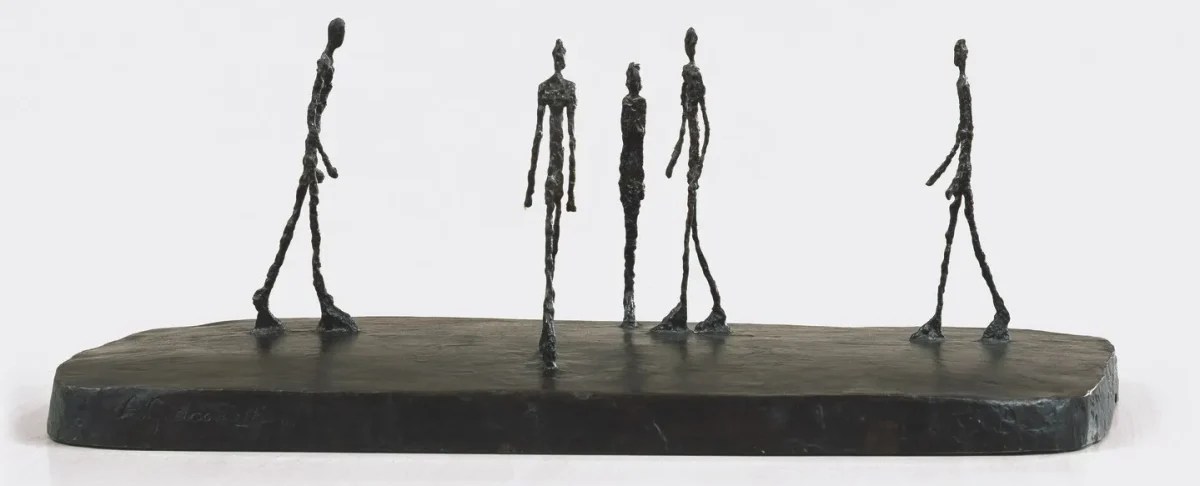
Primal Scene

(My story. My primal scene.

Livia knew about my literaro-philosophical escape capsule. She knew what I was hoping for. She knew my bust-out plan. My tunnel out of philosophy. She knew all about my philosophico-literary opus.

I had failed philosophically – of course I had. Anyone could see that I had failed – and would never do anything other than fail. But I was going to convert my failure. Change its meaning, my failure.

Because I was going to write it up, my philosophical failure. I was going to make literature out of all my philosophical failures!

Which meant I had never really been committed to philosophy – not really. Hadn’t I always been merely watching myself so-called philosophise? Wasn’t it always a matter of observing my failure to philosophise from a distance. And from a literary distance!

Because I’d taken out literary insurance against philosophical failure. Because I had my literary side-hustle, which was also a literary sidestep. I thought I’d found a literary loophole. A literary get-out clause. Something to escape my failed UK European philosopher destiny.

I was going to write the last will and testament of UK European philosophy, Livia says. UK European philosophy’s last gasp. UK European philosopher’s last fumblings in the dark. Its last attempts to pin the tail on the philosophical donkey …

Literature: that’s where my dreams of genius went. Literary writing: that’s where I stowed it, unlike my peers who only ever had philosophical dreams.

A genius of non-philosophical-genius: that’s what I wanted to be. A literary writer who could make good on his non philosophical genius. Very cunning. A genius-move all by itself.

Of course, the potential flaw in the plan was obvious: for wasn’t writing literature just as hard as writing philosophy, if not harder? Wasn’t it the case that the European literature-meisters I admired, that they were as much geniuses as the European philosophy-meisters I revered- if not more so?

Did I really think I was going to be a Blanchot 2.0? Livia asked. That I was going to be a new Hélène Cixous? Was I going to rise to the rank of a Marina Tsvetayeva? Of a Marguerite Duras? Did I really think I had the literary chops? The delicacy of literary register? The profound relationship to the language of literature? To the European greats? Who was I to try to make his literary mark after the massif of world modernist literature?

But I had an answer to that, too, Livia knew. I thought of myself as writing in a post-literary time. I conceived myself as writing at a time after literature – when all the prestige of literature had evaporated; when you couldn’t do that high-falutin’ stuff anymore. You couldn’t write in a high literary register, not anymore – not if you didn’t want to live in bad faith.

The time of literature had passed! The time of the possibility of writing literary fiction had receded. The ultimate excuse: these aren’t literary times, so I can’t be a literary genius.

The only way to carry great European literature forward was by eschewing everything that was European in literature. By writing Britishly. By keeping a British distance from the European fire from heaven. Which is to say, a farcical distance! A bumbling distance! The distance of an idiot, and a British idiot.

The literature (non-literature) true to our times was a farcical literature. A literature after the literary fall, the cultural collapse.

And didn’t I even dream of combining my non-literature with my non-philosophy? Didn’t I dream of writing my failed literature about my failed philosophy? My attempt to become a UK European philosophy was just as farcical as my attempt to become a UK European literary writer. And what’s more, it redoubled the farce. It multiplied the farce. It drove the farce to infinity.


No one ever accepts that they’re an idiot, Livia said. No one ever calls themselves an idiot and means it. They think they’re smart enough to know their so-called idiocy. As though they could outwit it – as though they might master it, by calling it idiocy; and by that they are thereby most assuredly not idiots. And that’s what my literaro-philosophy was for me, she said: my method of mastery. Which was a method of denial!

I called it idiocy. I called it a farce. As though you could intentionally create a work of idiocy! As though creating a farce was something you aimed at, rather than happened through failure.

The hubris! Did I really think I could outwit stupidity itself? That I’d made a move that changed the literary game – and the philosophical game?

My role was only to complete it, my idiocy. To fulfil it. To set the seal upon my idiocy by writing the book that could only be the book of my idiocy – and of idiocy in general. By writing the book of the Mercia Philosophy Department and its idiocy.

And wasn’t that Livia’s project: to write a book of idiocy? Wasn’t what she saw in me at that British Society for Continental Thought, all those years ago: my potential to find a form for Livia’s Idiotbuch?

My idiot’s cry. My dunce’s howl. My one-man protest against my British philistinism. My British provincialness, despite my second-generation Indianness. And my utterly inability to escape that philistinism – that provincialness!

Only once the idiotbuch is complete will the lightning strike, Livia said. Only when it’s finally done, will the world be shown as what it is. By the lightning’s light! By the lightning flash!


Livia used to quiz me about it: the origins of my literaro-philosophical writing. My philosophico-literary writing.

She used to make me tell it to her again: how I began my philosophico-literary writing in my Hertfordshire University years. As I commuted between campuses of Hertfordshire years. Between the Aldenham campus, the St Albans campus, the Hatfield campus. As I commuted to and from Watford, where I had my bedsit. Where I scraped by on my part-time wage, an itinerant hourly-paid philosophy lecturer on the Hertfordshire plain.

Listening to Penderecki on the extra-slow bus between the campuses of Hertfordshire University. Reading Mandelstam on the stopping-everywhere bus. Listening to Ligotti, on the requiring-infinite-patience bus. Reading Hélène Cixous on the stuck-in-various-traffic-jams bus.

And working in a department actually hostile to European philosophy, at Hertfordshire University. That papered its walls with articles warning about the perils of European philosophy. Of the charlatanry of European philosophy! Claiming that Deleuze was a fraud! That Derrida was an impostor! There were pinned up photocopies of accounts of Heidegger’s Nazism! Of Paul de Man’s fascist journalism! Of reviews of Intellectual Impostures! Of Fashionable Nonsense!

And there I was, reading Edmund Jabes behind enemy lines. There I was, in my Watford bunker, reading Friedrich Hölderlin in the cold and the damp. There I was, reading Hélène Cixous and Maurice Blanchot – reading books that veritably flaunted their philosophico-literariness, their literaro-philosophicalness, in my Watford bedsit.

There I was, dreaming that writing my literaro-philosophico project might just be possible, might just squeeze through as the last literary gasp, the last philosophical gasp before UK European philosophy shuts down entirely.

But I’d made a mistake. I was still trying to imitate their high seriousness, the European literary authors, the European philosophical authors I admired. I still thought I could write a UK version of high European philosophico-literary prose.

I still hadn’t failed, fundamentally. I still wasn’t howling from the depths of disaster. I hadn’t understood by Britishness – even my British-Indianness – stood in the way of my essentially European ambitions.

Humour: that’s what I had yet discovered. Laughter in prose, not just in life – at myself. And at my laughter. Abyssal laughter, that falls into itself. That laughs at itself laughing.

And I didn’t know the horror yet. The poison – the lie: I hadn’t experienced them. They hadn’t driven down deeply enough inside me.

It hadn’t happened yet, the disaster. It hadn’t burst into my world. It hadn’t reached my bloodstream. Crossed my blood-brain barrier.

The state of exception. The tyranny. The great Violation. The Atrocity The great Obliteration. That would break my life in two. That would reveal the Real Forces. Show the Whole. Reveal what was coming. What they had planned for us. That was to come. That’s what would show itself in my paper at the Society for Continental Philosophy annual conference. That’s what would roar out of them then, with only Livia knowing what it meant.)

If You Ruin it …

The paragraduates, or whoever they are, want it to fall apart. They want to accelerate the collapse. To bring on the disaster. They want more ruins.

I thought it was just natural.

Do you think plaster falls off the walls like that? That the ceiling caves in, like that bit over there? Do you think rain just gathers in pools on the floor? And the wild dogs? Where did the wild dogs come from?


If you ruin it, they will come …

Sure they’ll come – and ruin things even more. Is it going to be knocked down? It is now. Now that the paras have got to work on it.

Ruination

Haven’t we always seen the world but as a future ruin?


Wasn’t the world always ruined for us? Wasn’t it always a work of ruination? Wasn’t everything we’ve done only part of the general ruination? Haven’t we only ever piled more rubble upon the rubble?


Why was it given us to know so many terrible things? Through a kind of instinct – a terrible instinct. Through our temperaments. Through our Grundstimmungen. Were we born with such a Stimmungen? Might there be other, lighter Stimmungen? Lighter ways to see the world? Not our apocalyptic bias, but a joyful one?


The dream that you might say yes, instead of no. that you might be able to affirm, rather than condemn.


Go beyond us, postgraduates. We hope for you because we want to hope for ourselves, to believe that even our lives are redeemable. Our love for you is kindness to ourselves – is love for what we might be, in another life. In your lives, maybe.


You’re our chance, postgraduates – because you are not us. You are our future – because we are not you. Carry us forward, but in a new way. On a new wave. Sweep us onward. Bear us further.

We’re tired of living this kind of life. We’re tired of this grisly epoch. We’re tired of ourselves.


You’re not cursed like we are, postgraduates. You’re not fallen. Innocence – that’s what you possess.

Death Agonies

This is the interregnum between the end and the end. This is the playing out – the endless playing out. In its endless permutations. In its continual descent.

A bottoming-out that never quite bottoms out. An ending that never quite ends. A getting worse endlessly able to get still worse.

The never-ending end. The ceaseless cessation. When will the great finishing actually finish? Never.


Everything is a sign of the end. Everything is calling out to be ended. To be snuffed out.

All of Creation wants death, not just us. Everything wants to end. Cries out for it.

Everything’s ashamed. Has its head bowed. The Creation kneels, asking for the death blow.


The great desire for extinction. For the endgame to give way to the end.

Hasn’t everything served its purpose? Hasn’t everything done what it was made for? Hasn’t it all done enough? Seen enough? Been enough?


It’s gone on too long – of course. Obviously. And everything knows that, just as we know it. It all craves to be over. For the Judgement to be brought. For the end to come. For the blade to fall.

Why this senseless going on? Why this time without meaning? Why this endless andmoreagain?

It isn’t over yet: but why not? Will there be some grand finale? Some apocalypse? Some revelation?

Will we finally learn God’s plan? Will we be shown the Meaning of things? Will we sink to our knees and be actually shown it: the Meaning of things? The true sense of eschatology?


Not just our death wish, but the death wish of Everything. The death dream of everything. The song of death that’s sung by the Creation.


Hasn’t God given up on us? Hasn’t God given up on God? Does God want to die, too?


It’s time, of course it’s time. It’s beyond time.

These are the death agonies. We are the death agonies. The desire to die is agony in us. Everything we say – everything we do – is a way we say, Someone put an end to this.

Someone put it all down, the Creation! Someone place a pillow over its head! Someone administer a lethal injection!. Someone wrap hands around its throat, the Creation! Someone hang it all, the Creation! Someone pick it off with a sniper’s rifle! Someone just explode it, the Creation! Just car-bomb it! Just suicide-bomb it!


Let the logic play out. Let the end actually come to an end. And then what? Will a new cycle of history commence?

I don’t know. All I know is that it has to end.


We have a distaste for the Creation. It smells bad, to us. It tastes disgusting – like a corpse. The corpse of Creation. As though all of the Creation were dead. And had died a long time ago. And no one’s noticed the smell. The stench! Everyone just goes about their business, as though nothing had happened.


And this wine reminds us. This wine wakes us up.

We have to be alert. Our nostrils are filled with the stench. Our mouths … Our entire gustatory tracts. The great rotting and decaying.


The game is up, with this wine. The last hand has been played. The disgusting has finally revealed itself as the disgusting. It can’t pretend any further. The lie is up!


Evil. Malignancy. Chaos. It’s been there since the beginning, and before the beginning. Before the Creation – the act of Creation, there was something, not nothing.

But it wasn’t a thing. It was a teeming. It was a moving horror. A screaming, maybe. A screaming of an ancient god. A blind and senseless god.

There were gods like that, before the Creation. And there’ll be gods like that after the end too. And perhaps they were there all along, hiding. Skulking in the shadows.

But it’s here at last, the last day, the disgusting day. The day dawns, and it’s a disgusting dawn. Like cancer, spread everywhere. The cancer’s already spread. It’s a terminal case. It always was – a terminal case. That’s matter, right?


Our essential problem is how we live after the end. After we’ve died, which we already have.

So many deaths. Too many, really. How many times have we died?


A god is screaming, in this wine. A god is blind and screaming. Leviathan, maybe. Does Leviathan scream? And what about the Bug? Is the Bug singing in this wine?

You’ve been dormant until now, Helmut. You’ve been hibernating until now. Errupt, Helmut! Become the Heideggerian volcano! Drown us in Heideggerian lava!


What’s the Heideggerian life cycle, Helmut? Is it like in Alien – do you lay weird eggs? Do they hatch into the equivalent of, like, Heideggerian facehuggers? Do they disappear down your throat? Do they grow inside you, and burst out of your stomach? Is this all part of some devious plan to take over the world.


Is there a great mating cry of the Heideggerian, Helmut? Is it like Spock – only once every seven years? Will you unleash a great cry, hoping there might be another Heideggerian in the vicinity? Which is unlikely, since we’re in Newcastle! In the UK!

Ah, the lonely Heideggerian. There should be a song about that.


Jotting down your Heideggerian thoughts in your own Black Notebooks. What’s in your notebooks, Helmut – racist thoughts? Fascist thoughts? Are you writing the Little Book of Persecuting Jews?


You seem a lot happier, Helmut. You’re positively blooming in your Heideggerian skin. I guess you’re just busy being the best Heideggerian you can be.

In the Other World

In the other word, we are not dead. In the other world, we’ve never told a lie. In the other world, what we call death is what we call life.

In the other world, all the inversions are inverted. In the other world, the lies are untold.

In the other world, God is all in all. There’s no need for the word, God. There’s no need for the word, love. There’s no need for the word, peace.

But we’re in this world.

And what’s Organisational Management, in the other world?

Organisational Management doesn’t exist, in the other world.

And who are in the other world?

We’re alive, but not as we know it. In a different way. In an unimaginable way. Like angels, maybe.

Are we angels, on the other timeline? Beautiful.