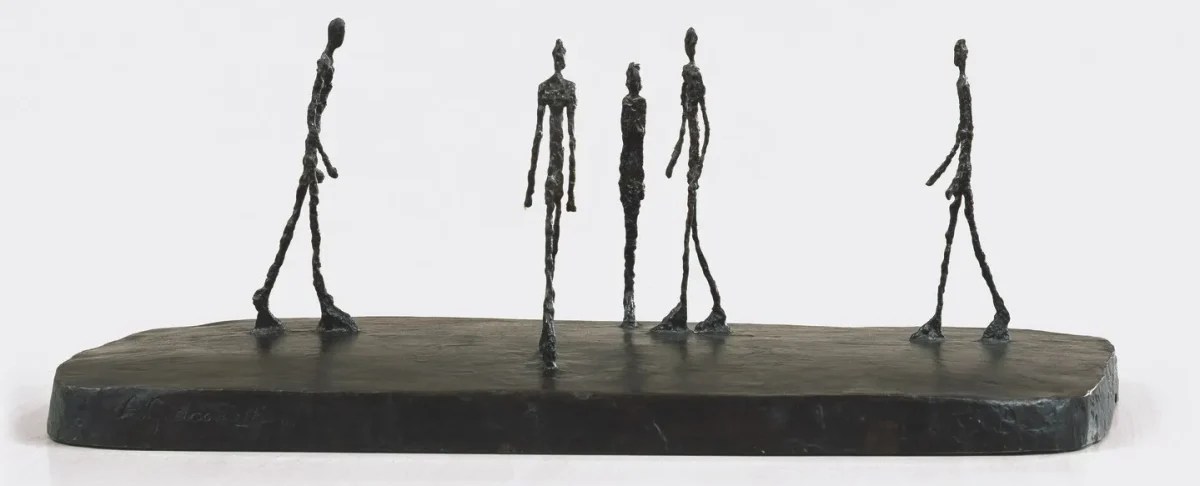
Faith Zone

Faith Zone. Do they really think they can speak of faith? Are they that stupid?

Unless it’s diabolical mockery. Unless it’s deliberate diabolism.


Faith Zone. This is where Organisational Management has risen to its full Satanism. This is where you can feel it.


Do the organisational managers dare to speak of faith? Don’t they know their limits? Are they that stupid?

Unless it’s a sign of diabolical intelligence.


Faith Zone. It’s deliberate diabolism …

Contraries

And which side was Cicero on – angels or devils?

Contraries – it was all about contraries, for her. The angel and the devil. Good and evil. Maximum tension – that’s what she wanted.

So why is her wine so demonic – it’s confusing?

Tension again. She wanted us disgusted with the world. Looking beyond it. God’s beyond the world, right?


Who are we supposed to be? What Cicero wants us to be?


We’re the test subjects of Cicero – that’s all. An experiment of Cicero


What if Cicero’s the devil? What if she’s Satan? Do you ever feel, like, that Cicero’s diabolical?


What if she’s just telling us more lies? What if Cicero is another liar?

The Great Drinking

Drinking should always be a turning from the world, according to Cicero. A drunken reaching. A drunken conversion, even. A drunken way of experiencing the creaturely condition – which is pure yearning.

Anything so long as it was void-drinking – not connoisseurship. Or pubism, which was just as bad.


I thought she liked us drunk. So long as it was a void drinking … Not pubism. Drinking was an exposure, not a refuge.

Drinking our way out of academic politesse. Out of academic timorousness.

Until we could say great and terrible things about the world. Apocalyptic things! Wild baseless generalisations!

Until we could give philosophy over to roaring! To rumbling!


To wake up, through drink. To open eyes in the night. Attain a terrible vigilance. To see through all things – to the end of all things. To become drunken prophets …


To sail perpetually at the edge of alcoholism. That’s the trick. Without falling into it! Without succumbing!

We must let ourselves drown in alcohol – our old selves.

And no doubt some of us will be picked off by alcoholism. A couple of us at least will die in the gutter. But it will have been worth it.  


This is how philosophy will be reborn: on drunken nights like this. Nights in which we’d forgotten so much. When we’d left behind all scholarship. All hedging. All shoring up of our positions. All rigour, probably – so called rigour. When we’d left behind our reading.

Not Connoisseurs

She saw it in us: the dangers of drunken comfort. Of becoming connoisseurs.

But Cicero was a connoisseur!

She didn’t want us to become connoisseurs. She didn’t want us savouring anything. Comparing tasting notes. She didn’t want us knowing about what we drank – not really. Not like her European professors.

No Epicureanism! No cultivating the palate! We should never feel at home with wine. There should be something of the streetdrinker about us, Cicero said. Of the down and out, necking cider.

Not Supposed to Drink

We’re not supposed to drink. They don’t want us to drink and together. Because we realise things, when we drink. We work things out. We expose their lies, when we put our drunken heads together. We put things together, in our drunken intelligence. We come up with theories. We work out what they want to do with us.

Void Drinking

Void drinking – that exposes the lies as lies. That shows the absence of foundations. Of legitimacy. That makes of all institutions and power but a usurpation. That empties the world of all imposture.

We’re not fooled: that’s what void-drinking says. Don’t lie to us: that’s void-drinking’s message.

Helmut

All your pathos, Helmut. You even look like the young Max von Sydow from all those Bergman films. Who says all those existentialist things.

I’m not an existentialist.

Whatever.


I think you should write the thirty-fourth introduction to Being and Time, Helmut. I don’t think there are enough of them yet.


So solemn, Helmut. Just think who you would become if we encouraged you. You’re lucky you have us to draw us out of yourself.


Would you describe yourself as happy-go-lucky, Helmut?

Greasy Snow

The snow’s greasy. This isn’t how it’s supposed to be. I’ll bet it doesn’t look like this in the Alps. What’s wrong with it?: snow’s not supposed to be grey.

It’s like the snow is full of ashes. It’s not snow – it’s sludge. It’s slurry. It’s like it’s industrial waste. It’s not just frozen water, is it?

Yeah, but water’s not water anymore, either.

Why did they have to fuck with the snow? Why did they have to fuck with anything?

Because we’re too many and they want to kill us.

Aleksei German

Khrustalev, My Car is about a mood. The ambience of a time! The fundamental mood of a time! 1953! The Doctors’ Plot against Stalin. When all the doctors were arrested as spies. As in the pay of the CIA or MI6. As undermining Soviet health.


Klensky’s head of a military hospital. He’s disgraced, for some reason. Toppled from power. He’s raped by convicts. In the back of a van. Children pelt him with stones. But he rises again. To tend to Stalin in his dacha deathbed. But Klensky can’t return to his old life. He abandons his family, his home …

Is that what happened? So it’s a redemption arc …


That bit where Klensky is raped in the back of the van. The bit where Klensky is beaten with sticks. Why? What’s it about?


We’re not supposed to know what’s happening. From what perspective it’s been told. What it all adds up to. What’s relevant and irrelevant.

No explanations, right? No establishing shots. It’s impossible to know who all the characters are, or what they have to say.

The camera stumbling about. Bits of voiceover, adding up to nothing.

You wait for a plot to get going, but there is none. Just one farcical situation after another. Just Gogol-style grotesquerie. Black humour …


And it’s all so ominous. It’s all as though descending. Violence everywhere. Senselessness in general. Paranoia. Hallucination! Delusion! Hysteria! It’s all hurly burly. It’s all pell-mell.

Inducing panic on the part of the viewer. What’s happening? What’s real and what’s dream? What’s meaningful and what’s meaningless? What’s necessary and what contingent? What’s it all about? How does it all fit together?


Grime! Sludge! Sweat! Swearing! Voice and noises coming from nowhere. Absurdity! Pell mell! Burlesque!


These aren’t films, they’re fevers.


A deranged, dislocated Russia. A mad Russia.


The communal apartment … the kommunalka … totally crowded, lacking in all privacy. That’s the key to it all …


In the fields of History. In the mire of History. In the quagmire of history. Swallowing everything up! The whole world!


Smoke. Coughing. Volleys of noise.

Dialogue drowned out. Our view blocked.

All these labyrinthine interiors.

Characters looking at the camera. Addressing it. Characters fucking the camera … that really happens.


The camera’s as bewildered as we are … The camera roving … Lost …


Sets bathed in shit. In piss. In sick. In viscera.

As though filmed with a hidden camera. As though it were found footage.

So immersive. Sensory overload madness. Like you’re being drowned in filth and horror …


The camera can never see properly. All this random shit dangled in front of it.


Claustrophobia. Overload. Overcrowding. Narrow alleyways. Smoke everywhere.


Randomers staring into the camera. Making faces into it. All these grotesque extras. Hideous!


Rain-battered streets. Mud on all surfaces. On the faces of the inhabitants. Streets thronged with peasants, soldiers, cretins.


No narration. No plot. Just some mad fucking pageant. Bustling, bristling. No pause. Just parades …


General sludge. Is it mud? Is it shit? Hard to tell.


Deep focus. Disorientation. People appearing, disappearing. Brooms, kettles in front of the lens, obstructing the view. Geese, goats, ducks, a monkey, swarms of flies, and human confusion in front of the lens. Dangling things: ropes, chains …

General violence. People being offed. A general whacked in the head with a spike. Entrails. Eyeballs.


The film doesn’t want to make sense! It refuses to make sense! It has better things to do than to make sense!


Each frame filled.

Squalor. Confusion. Contagion. Carnivalesque and then some. Grotesquerie. General putrefaction.


Long shots. Crowded interiors. Mad slobbery. Mumbling dialogue. Off screen voices, without source. Non sequitur conversations. ‘A scholar is not an enemy, the enemy is a scholar in doubt’. ‘You write books, but you have no thoughts’.


The idiot who holds a toilet seat around his face and declares it as a painting.

The Philosophico-Literary

Philosophy’s not enough for you. Literature’s not enough for you. It had to be philosophico-literary. Literary-philosophical. That hyphen! That joining of terms!


Do you think the world’s ready for your literary philosophical musings? Do you think the time is right to unleash them on the world? Are they what the world’s waiting for? What the world never knew it needed, until now?


Do we actually need any new literary-philosophical books? Haven’t we had quite enough of those?

Hasn’t continental Europe been a literary-philosophical book factory for the last however many years? There are entire literary-philosophico oeuvres. People who are much cleverer than you, much more literate, much better educated, have spent decades crafting their philosophico-literary oeuvres.


You’re late to the party. What do you have to contribute? What’s going to be your USP? What are you going to bring to the literary-philosophical table?


Is it literary-philosophical or the other way round? Does it matter?


Are you going to bid for funding to help you write it? They’ll really go for it, the funding bodies. It really is their kind of thing. I want to write a literary-philosophical masterpiece. I want to write belated philosophico-literary work when the age of literature has entirely collapsed. And the age of philosophy is over.


No one’s interested in your literary-philosophical writings. Not even us! And we’re your friends. We’re not going to read a line. We’re actually going to unread it. See whether we can drive the memory of it from us.


None of us will read a line you write. We’re not even curious. We’re not even wondering, What will Shiva’s book be like? No. You might be many things, Shiva, but you’re no literary-philosophical writer.


Reading your work: imagine that. Opening a book with your name on the cover. Impossible! It’ll never happen!


And you’re not bothered by the futility of it? It doesn’t worry you that no one is actually interested? Nor will they be! Nor could they be!


The literary. What does it mean to you, anyway? What could it mean? To the likes of us? The literary! And when it’s conjoined with the philosophical!? When it’s a question of the literary-philosophical? Of the philosophico-literary?

Something so far away from us. Something so exalted.

Which is why we love Hölderlin so. Which is why we’re full of Hölderlin-enthusiasm. Without understanding Hölderlin. Of course! Even as we read all these books and essays about Hölderlin. Doubtless! Even as we read every European philosopher worth their salt on Hölderlin!


The poetic slash the philosophical. All those philosophers who want to become literary authors! All those literary authors who want to become philosophers! Who want to operate in the literary-philosophical zone. In the philosophico-literary zone. The sweet spot between them. Where literature and philosophy become indiscernible!


The literary-philosophical. This coupling. This joining of words. By the hyphen. Everything is about the hyphen. What matters is to think the hyphen. As no one else before had thought it. No one in the history of literature or the history of philosophy.


Do you think you’ll become some literary celebrity? Will you be invited to join the Royal Society of Authors? Do you think you’ll win awards? Or will you become some philosophical celebrity? Will they publish you in Mind? In Proceedings of the Aristotelian Society?


Do you think you’re ahead of the curve. That this is the where our culture’s heading: towards literary philosophy?